Best Door Styles to Make a Narrow Hallway Feel More Open
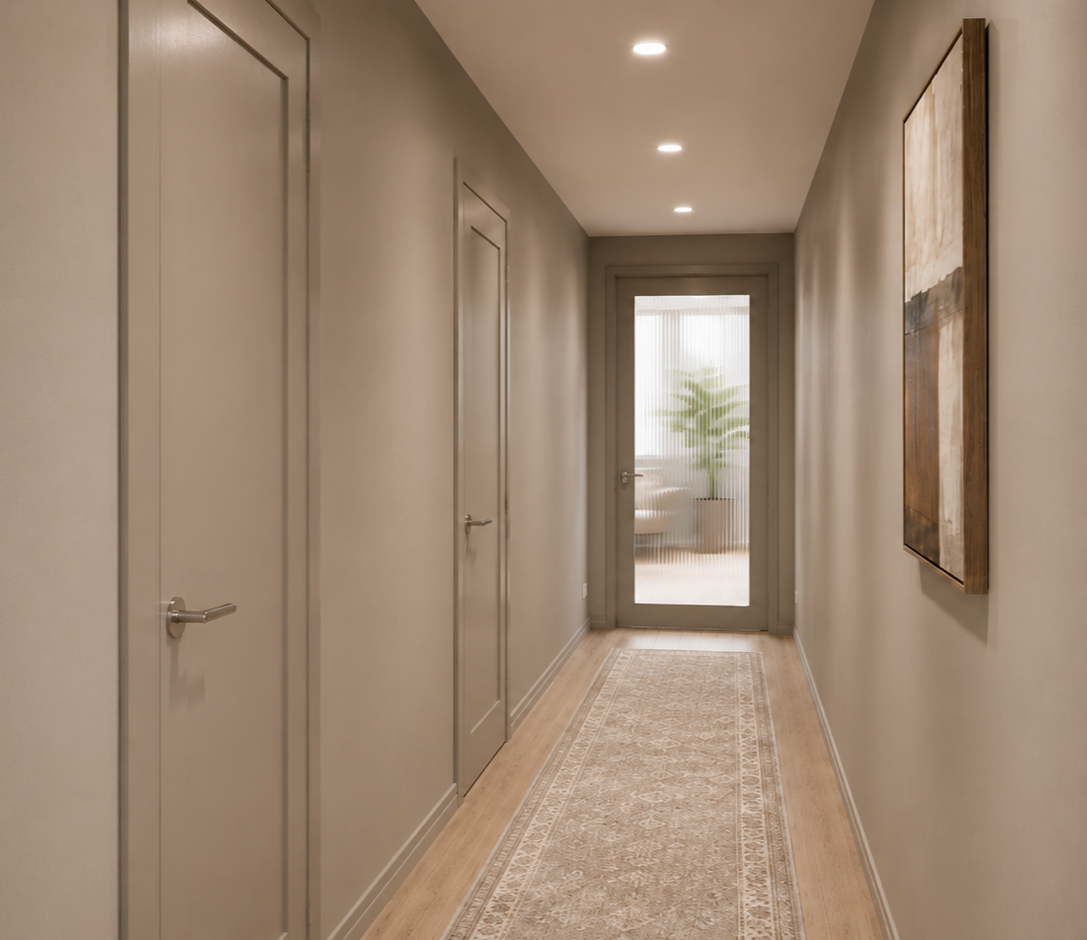
In a narrow hallway, interior doors can either help the space feel calm and continuous—or draw attention to how tight it is. The goal is uninterrupted visual flow, allowing the eye to move through the hallway without repeatedly stopping at doors, trim or hardware.
This can be an issue in older Seattle homes with paneled doors and heavy trim, as well as in cramped new condos where every inch of hallway counts. Here's how I usually sort through the options.
Slab Doors: A Practical Way to Reduce Visual Clutter
For a tight hallway, I think of a slab door first. A slab door has a flat surface without raised or recessed panels. Because it creates fewer shadow lines than paneled doors, it helps walls feel more continuous and less busy. Slab doors are common in many homes and renovations and are a practical choice for narrow hallways.
Most slab doors in U.S. homes are installed with standard trim rather than flush to the wall. Even so, when paired with simple casing and coordinated colors, they can noticeably improve the sense of openness in a tight corridor.
Flush-to-Wall Doors: A Specialized Option
A flush-to-wall door aligns with the drywall and typically has no visible trim, creating a seamless appearance. This look is more typical of European-style or high-end contemporary construction and requires specialized frames and precise installation.
While flush-to-wall doors can create an exceptionally clean result, they are usually limited to custom homes or major renovations due to their added cost and complexity.
Low-Profile Shaker Doors: A Subtle Alternative
For homeowners who want some detail without visual heaviness, a single-panel shaker door can work well with a variety of architectural styles. Slim rails, narrow stiles, and a flat center panel provide definition without creating the deep shadow lines that tend to make narrow hallways feel tighter.
How Door, Trim, and Wall Color Work Together
Color choices play a major role in how open a hallway feels.
Matching the door and wall color helps doors visually recede.
Painting trim the same color as the wall reduces visual breaks and keeps the hallway feeling continuous; subtle differences in sheen are often enough to define edges without closing in the space.
High-contrast combinations, such as dark doors with white trim, tend to emphasize narrow proportions rather than soften them.
Hardware That Blends, Not Competes
In a narrow hallway, door hardware is seen repeatedly and up close. Clean-lined lever hardware creates fewer visual interruptions than bulky or ornate knobs and is easier to use in tight spaces.
Finish matters as well. Satin nickel levers tend to blend into white or light-painted doors, while brushed brass pairs naturally with light wood, picking up warm tones without creating strong contrast. High-contrast finishes can draw unnecessary attention and disrupt visual flow.
Using Glass Thoughtfully
Hallways may function as transitions or destinations. In tighter, more enclosed corridors—especially those lined with doors—the goal is for the hallway to quietly recede, making solid doors and blended colors the better choice.
In hallways that connect open or light-filled spaces, doors with glass panels (not grids) can help the space gently extend into the next room by allowing light and sightlines to carry through. Frosted, reeded, or translucent glass panels keep the effect subtle, while clear glass can work well for offices or creative spaces when the room beyond is visually simple. The key is using glass selectively, so it supports flow rather than becoming a focal point.
A Note on Lighting
Lighting placement also affects how spacious a hallway feels. In narrow hallways, overhead lighting works better than wall sconces, which not only project into limited walking space but also add visual interruptions that can make the corridor feel more cramped.
Small Details That Reinforce Openness
Choose simple, narrow trim rather than layered or decorative profiles or thick, highly detailed casing that creates strong shadow lines.
Rely on differences in sheen rather than contrasting paint colors, and hardware that blends.
Whenever possible, ensure doors swing into rooms rather than into the hallway.
Get the door, trim, and hardware working together, and the hallway does its job without anyone noticing it.
Feeling stuck on a challenge like this in your own home? Let's talk it through — sometimes a quick conversation is all it takes.